
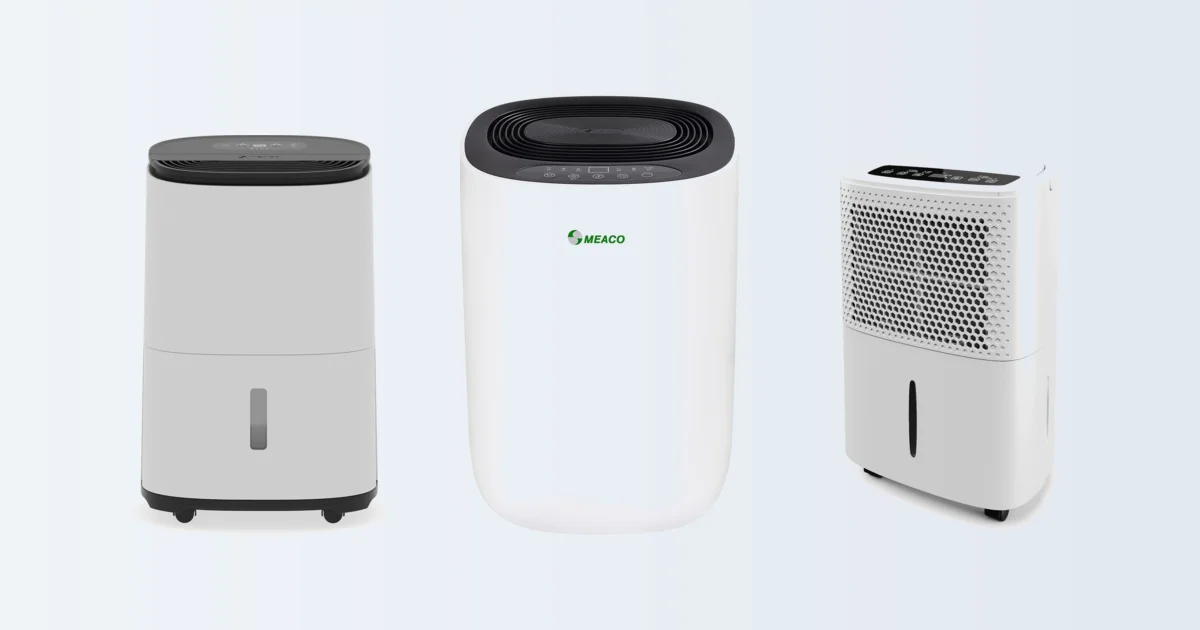
Every autumn the same thing happens in a lot of British homes. The heating goes on, the windows go shut, the washing moves indoors onto the radiators, and a few weeks later there's a grey bloom creeping along the top of the bedroom window. A dehumidifier is the boring, sensible fix, and you don't need to spend much to get a good one. Every machine in this guide costs less than £200, and the best of them is £129.
I've picked five that were in stock at UK retailers, sold by the retailer or the brand itself, and under £200 when I checked on 24 September 2026. I've also worked out what they cost to run on the new October price cap, because a cheap dehumidifier that eats electricity isn't cheap for long.
The short version: the MeacoDry ABC 10L at £129 is the one I'd buy for most homes. If money is tight, the Pro Breeze 12L at £114.74 is the budget pick. And if you're drying out a cold garage or conservatory, skip the rest and get the Pro Breeze 10L Desiccant.
How do they compare side by side?
| Dehumidifier | Price | Type | Extraction | Tank | Noise | Running cost (maker's claim) | Warranty |
|---|---|---|---|---|---|---|---|
| MeacoDry ABC 10L | £129 | Compressor | 10L/day | 2.6L | 35dB | 3p/hour at 24.5p/kWh | 2 years (extendable to 5) |
| MeacoDry Arete One 10L | £159.99 | Compressor + HEPA purifier | 10L/day | 2.5L | 35dB | 3p/hour at 24.5p/kWh | 5 years |
| Pro Breeze 12L | £114.74 | Compressor | 12L/day | 1.8L | Under 38dB | From 5p/hour | Not stated on listing |
| EcoAir DC12 MK3 | £123.99 | Compressor | 12L/day | 2L + drain hose | 35 to 39dB | 210W (about 5.5p/hour at 26.32p/kWh) | Not stated on listing |
| Pro Breeze 10L Desiccant | £199.99 | Desiccant | 10L/day | 3L + drain hose | Not stated | From 16p/hour | Not stated on listing |
Prices checked on 24 September 2026. Running costs are each manufacturer's own best-case figure, apart from the EcoAir, which I've worked out from its stated wattage.
What should you look for in a budget dehumidifier?
- Compressor or desiccant. This is the big one. Compressor models are cheaper to run and are the right choice for a normal heated home. Desiccant models keep working in the cold, which makes them the choice for garages, conservatories and unheated rooms, but they use a lot more electricity. There's a whole section on this further down.
- Extraction rate, taken with a pinch of salt. The "10L" or "12L per day" figure is the maximum under warm, very humid test conditions. In a normal British house in winter, you'll collect a good deal less. For a flat or a two-bed house, 10 to 12 litres is plenty.
- A humidistat. All five here have one. You set a target humidity (around 50% is a sensible starting point), and the machine switches itself off when it gets there. This is what keeps running costs down, because it isn't grinding away all day in a room that's already dry.
- Tank size and a drain hose. A small tank means emptying it once or twice a day in damp weather. If you're putting it somewhere near a sink or floor drain, a continuous drainage hose means you never empty it at all.
- Noise. If it's going in a bedroom, look for 35 to 38dB. Anything louder and you'll hear it at night.
- A laundry mode. If drying clothes indoors is the main reason you're buying, a dedicated laundry setting helps. More on that below.
The 5 best budget dehumidifiers under £200
1. MeacoDry ABC 10L: best overall (£129)
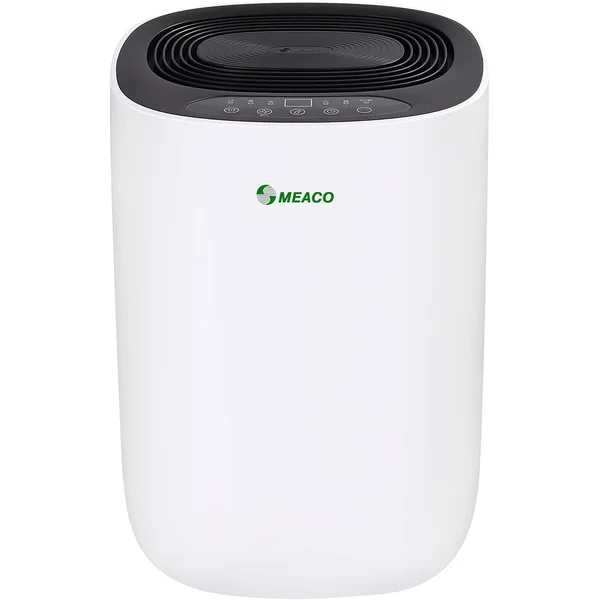
Meaco is a British company that specialises in air treatment, and it shows. The ABC 10L is its everyday model, with more than 6,000 reviews on Amazon averaging 4.7 stars. When that many people are that happy, I stop worrying.
It removes up to 10 litres a day and runs at 35dB, quiet enough to have won a Quiet Mark award. The laundry mode runs for six hours and then switches itself off, so you can load the airer, press one button and go to bed. It has a humidity display, a target you can set, a 24-hour timer, auto-defrost, a child lock and a 2.6-litre tank that switches the machine off when it's full rather than spilling everywhere.
Meaco quotes a running cost of 3p an hour, based on electricity at 24.5p per kWh. On the new 26.32p rate that works out at roughly 3.2p an hour, which is the lowest claimed figure on this list. The warranty is two years, which you can extend to five through Meaco.
Pros:
- Thousands of reviews, very high average rating
- Quiet enough for a bedroom at 35dB
- Six-hour laundry mode that turns itself off
Cons:
- Two-year warranty as standard, shorter than the Arete One
- Heavy at 10.5kg
Best for: Flats and one or two-bedroom houses with condensation or washing to dry.
Where to buy: Amazon (£129)*
2. MeacoDry Arete One 10L: best for bedrooms and allergies (£159.99)
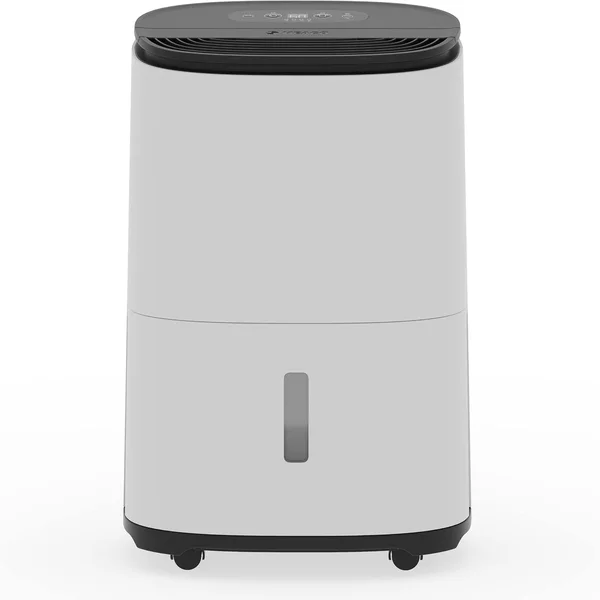
The Arete One is what you get when you spend an extra £30 on the Meaco. It's the same 10-litre extraction and the same 35dB, plus two upgrades that make the extra money worthwhile.
The first is a built-in H13 HEPA filter, so it also works as an air purifier, catching dust, pet dander and pollen. If anyone in your house has allergies or asthma, that matters most in a bedroom, where you spend eight hours breathing the same air. The second is the warranty: five years as standard. Meaco says it's the only brand in the UK offering that on a home dehumidifier.
You also get a front-loading 2.5-litre tank, which is easier to empty than one you lift out of the top, plus a night mode, a smart humidity mode, the same six-hour laundry setting, hidden castors and a cable tidy. Meaco's running cost claim is the same 3p an hour at 24.5p per kWh. It has 781 reviews averaging 4.6 stars.
Pros:
- Dehumidifier and HEPA air purifier in one
- Five-year warranty as standard
- Front-loading tank, night mode and laundry mode
Cons:
- £30 more than the ABC for the same extraction
- Replacement HEPA filters are an ongoing cost
Best for: Bedrooms, allergy sufferers and anyone who wants the longest warranty.
Where to buy: Amazon (£159.99)*
3. Pro Breeze 12L: best budget pick (£114.74)
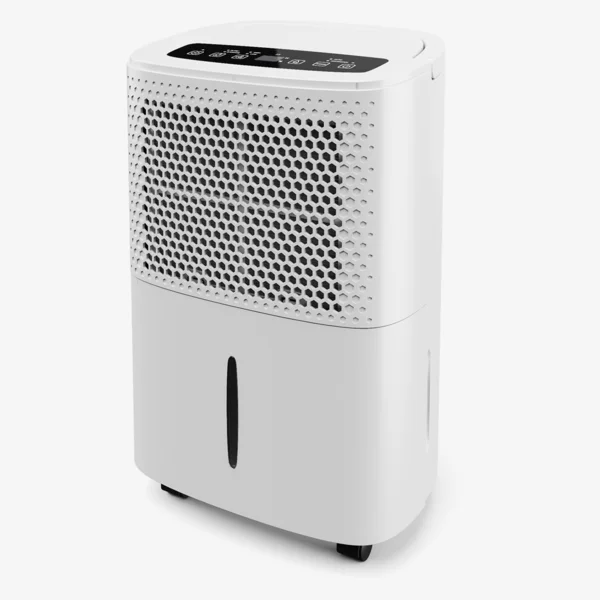
Pro Breeze is one of those brands you see everywhere on Amazon, and this 12-litre model is the reason. It has close to 5,700 reviews averaging 4.6 stars, and at £114.74 it's the cheapest compressor machine here while pulling out slightly more water on paper than the Meacos.
It's compact for a 12-litre unit and Pro Breeze puts it at under 38dB. You can set a target humidity anywhere between 30% and 80%, and it shuts off once it's there. There's also a sleep mode and a 24-hour timer. Pro Breeze says it costs as little as 5p an hour to run and suits rooms of around 20 square metres.
The catch is the tank. At 1.8 litres it's the smallest here, so in a very damp house you'll be emptying it more often than the Meacos. That's the trade for saving £14 over the ABC.
Pros:
- Cheapest compressor model in the guide
- 12 litres a day and a huge number of good reviews
- Compact, with a sleep mode
Cons:
- Smallest tank at 1.8 litres
- Rated for smaller rooms than the others
Best for: A single damp room or a small flat on a tight budget.
Where to buy: Amazon (£114.74)*
4. EcoAir DC12 MK3: best 12-litre alternative (£123.99)
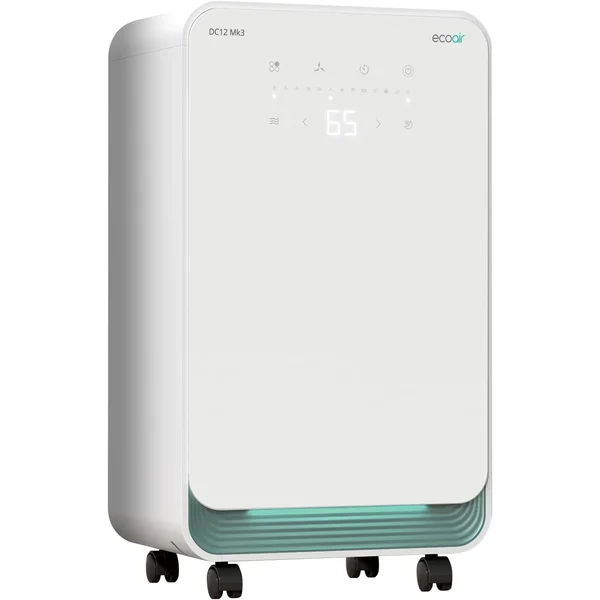
I've included the EcoAir partly because it's upfront about power. Instead of a best-case "pence per hour" figure, the listing gives you the wattage: 210W. That makes it easy to work out what it'll cost you, and I've done the sums in the running costs section below.
It removes up to 12 litres a day, has a 2-litre tank, and comes with a continuous drainage hose in the box. If you can stand it near a sink or drain, you never have to empty it. There's an electronic humidistat, a 1 to 24-hour timer, auto shut-off, auto-defrost, a sleep mode, a child lock, a washable filter and castors. Noise is quoted at 35 to 39dB.
One thing to note: EcoAir gives its operating range as 15°C to 35°C, which is typical for a compressor machine. It's built for heated rooms, not garages. It's sold directly by Amazon and has 260 reviews averaging 4.2 stars, fewer than the others, which is why it isn't higher up.
Pros:
- Drain hose included for hands-free running
- Published wattage, so running costs are easy to work out
- Sold and shipped by Amazon
Cons:
- Fewer reviews than the Meaco and Pro Breeze models
- Not for rooms below 15°C
Best for: A utility room or bathroom where you can run the drain hose to a sink.
Where to buy: Amazon (£123.99)*
5. Pro Breeze 10L Desiccant: best for cold rooms and garages (£199.99)
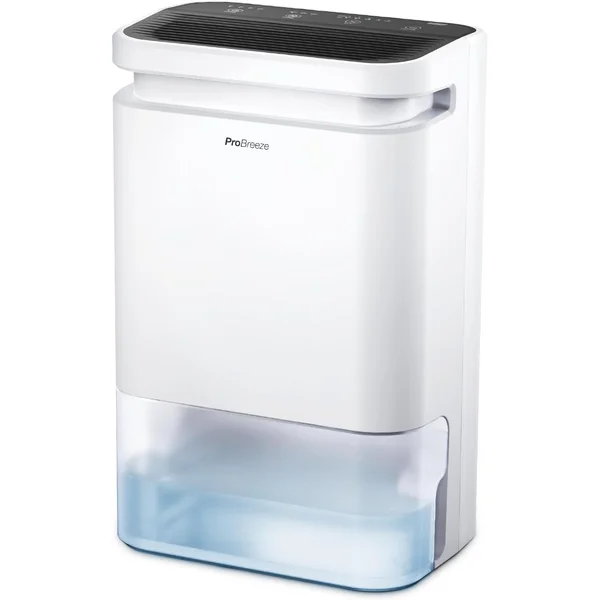
This is the odd one out, and for some people it's the only one on the list that makes sense. Compressor dehumidifiers struggle in the cold. Pro Breeze says they stop collecting moisture below about 15°C, which rules them out for an unheated garage, a conservatory in January or a cold spare room. This desiccant model is rated to work from 1°C up to 40°C.
It removes up to 10 litres a day, has a big 3-litre tank that switches the unit off when full, and comes with a continuous drainage hose. You can set a target humidity, there's a timer, and the air outlet swings to direct the airflow where you want it. According to Pro Breeze's own site it also has a heating setting, and desiccant machines put out a bit of warmth as they work, which is welcome in a cold room.
The trade-off is running cost. Pro Breeze quotes as little as 16p an hour, roughly three to five times the compressor figures above. In a heated living room that would be a waste of money, but in a cold space it's the one that will actually do the job. At £199.99 it's also only just under the £200 line. It's £209.99 on Pro Breeze's own site, so Amazon is the place to buy it.
Pros:
- Works down to 1°C, where compressors give up
- Large 3-litre tank and a drain hose
- Gives off a little warmth in cold rooms
Cons:
- Much more expensive to run than a compressor
- Right at the top of the budget
Best for: Garages, conservatories, caravans and unheated rooms.
Where to buy: Amazon (£199.99)*
Which is best for drying clothes?
This is why a lot of people buy one in the first place. Drying washing on radiators puts litres of water into the air, and that water ends up running down your windows.
For drying clothes, I'd pick one of the Meacos. Both have a dedicated laundry mode that runs for six hours and then switches off, so you're not paying for it to run all night once the clothes are dry. Meaco also says its machines use considerably less electricity than a tumble dryer. That makes sense when you look at the claimed running cost of around 3p an hour.
A few things make a big difference whichever machine you use:
- Use a small room and shut the door. A dehumidifier drying a box room full of washing works far faster than one trying to dry the whole downstairs.
- Space the clothes out. Air needs to get between them. A packed airer dries slowly whatever you do.
- Put the dehumidifier close to the airer, with the airflow pointing towards it where the machine allows.
How much does a dehumidifier cost to run?
This is the part that matters most for a money-saving site, so I've done the maths. From 1 October to 31 December 2026, the Ofgem price cap puts electricity at an average of 26.32p per kWh for direct debit customers. Ofgem notes that VAT has been removed from household electricity until 31 March 2027. Your own rate may be a little different, so check your bill.
The sum is simple: watts ÷ 1,000 × your unit rate = cost per hour.
Take the EcoAir DC12, the only machine here with its wattage on the listing. At 210W, it costs about 5.5p an hour at 26.32p per kWh. Run it for eight hours a day and that's around 44p a day, or roughly £3.10 a week. In practice it'll often be less, because the humidistat switches it off once the room reaches your target.
The other manufacturers quote pence per hour instead. Meaco says its two models cost 3p an hour at 24.5p per kWh, which is about 3.2p at today's rate. Pro Breeze quotes from 5p an hour for the 12-litre compressor and from 16p an hour for the desiccant. Treat all of these as best-case figures. They're the makers' own numbers, and a machine working flat out in a very damp room will use more.
So a compressor dehumidifier in a heated home costs a few pence an hour. A desiccant model costs several times more, which is why you only want one if the room is cold.
To cost your own dehumidifier, with its actual wattage and the hours you run it, use our dehumidifier running cost calculator.
Compressor or desiccant: which do you need?
Get this wrong and the brand won't save you.
Choose a compressor (the Meacos, the Pro Breeze 12L or the EcoAir) if the dehumidifier is going in a normally heated room: a bedroom, a living room, a hallway, a bathroom. They're cheaper to run and pull out more water per penny when the room is warm. Their weak spot is the cold. Below around 15°C they slow right down.
Choose a desiccant (the Pro Breeze 10L Desiccant) if it's going somewhere cold: a garage, a conservatory, a caravan, a spare room you don't heat. It keeps working near freezing and gives off a bit of warmth. The price is higher running costs, so it's the wrong choice for a warm room.
If you're not sure, ask yourself whether the room is usually heated in winter. If it is, get a compressor.
When is the best time to buy a dehumidifier in the UK?
Dehumidifiers are seasonal, and the timing works against you a bit. Demand peaks in October and November as the heating goes on and the washing moves indoors, and popular models can sell out when the weather turns.
- Black Friday (late November) often brings dehumidifier discounts, but by then you may have had weeks of condensation. If you need one now, don't wait just for a sale.
- Amazon Prime Big Deal Days (October) is a good middle ground, early in the damp season with decent discounts.
- Spring and summer can be a good time to buy, because nobody is thinking about damp. If you can plan ahead for next winter, buy in May.
- Brand sites like Meaco and Pro Breeze run their own offers, but compare with Amazon. The Pro Breeze desiccant was £10 cheaper on Amazon when I checked.
Frequently asked questions
What size dehumidifier do I need?
For a flat or a one or two-bedroom house, 10 to 12 litres a day is plenty. All five here fit that. Remember that the extraction figure is a maximum in warm, very humid conditions, so a bigger number mostly means it gets the job done a bit faster.
Will a dehumidifier get rid of mould?
It stops mould coming back by keeping humidity down, but it won't remove mould that's already there. Clean it off first with a mould remover, then run the dehumidifier to keep the room at around 50% humidity. If the damp is coming from a leak or rising damp, a dehumidifier only treats the symptom, so get the cause looked at.
Where should I put a dehumidifier?
In the room with the problem, with the door shut, and away from walls and curtains so the air can move freely. For condensation on bedroom windows, run it in the bedroom in the evening. For washing, put it in the same small room as the airer.
Is it cheaper to use a dehumidifier or a tumble dryer?
Meaco says its dehumidifiers use considerably less electricity than a tumble dryer, and at a claimed 3p an hour it's easy to see why. Drying is slower, so it suits people who don't mind leaving washing up overnight.
Our verdict
For most homes, the MeacoDry ABC 10L at £129 is the one to get. It's quiet and cheap to run, its laundry mode is ideal for drying washing, and more than 6,000 Amazon reviewers back it up. If it's going in a bedroom or anyone in the house has allergies, spend the extra on the MeacoDry Arete One 10L at £159.99 for the HEPA filter and five-year warranty.
On a tighter budget, the Pro Breeze 12L at £114.74 does the job for less, as long as you don't mind emptying a smaller tank. The EcoAir DC12 MK3 at £123.99 is the one to pick if you can run a drain hose. And for anywhere cold, the Pro Breeze 10L Desiccant at £199.99 is the only one here that will keep working.
While you're sorting out the house for winter, our budget cordless vacuum guide might come in handy too. You can also keep an eye on our home and kitchen deals, as dehumidifier prices tend to move once the cold weather arrives.